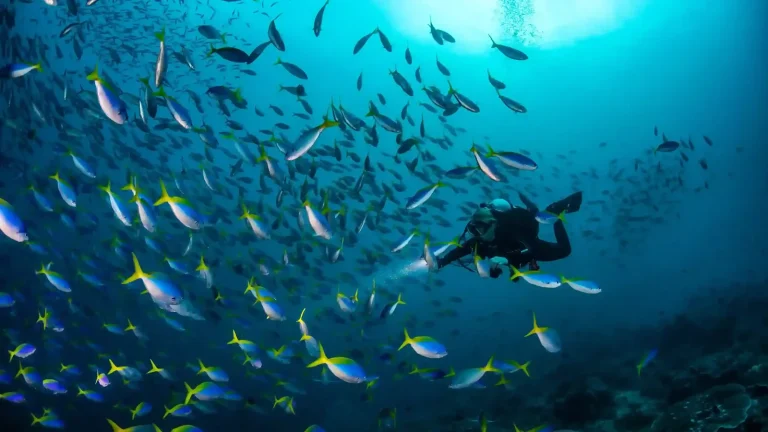
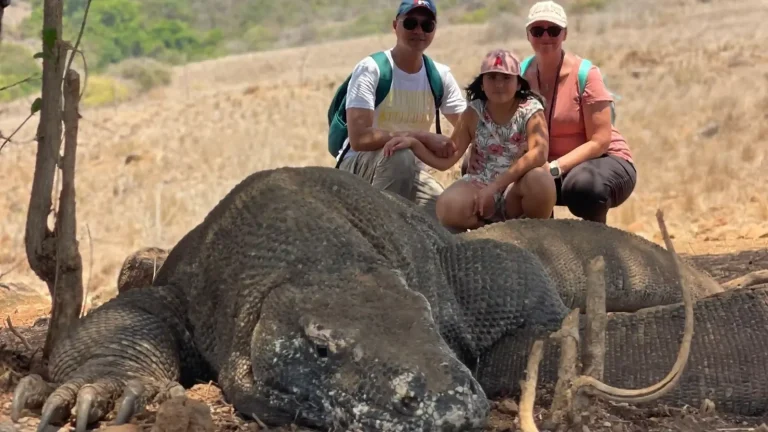
The Komodo dragon (Varanus komodoensis) is the largest living lizard on Earth and one of the most fascinating creatures you will ever encounter. Found nowhere else in the wild except on a handful of islands in eastern Indonesia, these apex predators have captivated scientists and travelers for over a century. Seeing Komodo dragons in their natural habitat is the defining experience of a Komodo yacht charter — a bucket-list wildlife encounter that ranks alongside African safari and Antarctic penguin colonies.
How Big Are Komodo Dragons?
Adult male Komodo dragons average 2.5-3 meters (8-10 feet) in length and weigh 70-90 kilograms (150-200 pounds), though exceptional individuals have exceeded 3 meters and 100 kilograms. Females are significantly smaller, typically 1.8-2.2 meters long. Despite their bulk, Komodo dragons are surprisingly agile — they can sprint at up to 20 kilometers per hour in short bursts, swim between islands, and even climb trees when young. Their powerful tails are as long as their bodies and are used as weapons against rivals and prey.
Where Do Komodo Dragons Live?
Komodo dragons are found on only four islands in Indonesia: Komodo, Rinca, Gili Motang, and Flores. The total wild population is estimated at approximately 3,000-5,000 individuals, with the largest concentrations on Komodo and Rinca Islands — both within the boundaries of Komodo National Park. This extremely limited range makes them a vulnerable species and one of the most geographically restricted large predators on the planet.
On your Komodo yacht charter, you will visit either Komodo Island or Rinca Island (or both on longer charters) for a guided dragon trek. Komodo Island is the larger and more famous of the two, while Rinca offers a shorter trek with equally reliable dragon sightings and a more rugged landscape. Both islands have ranger stations where treks begin, and encounters with dragons are virtually guaranteed — they are frequently spotted near the ranger stations, along trails, and near water sources.
Are Komodo Dragons Dangerous?
Yes, Komodo dragons are genuine apex predators and must be treated with absolute respect. They hunt deer, water buffalo, wild boar, and other large animals using a combination of powerful jaws, serrated teeth, and venom glands that deliver anticoagulant and shock-inducing compounds. A bite from a Komodo dragon is medically serious and potentially fatal without treatment.
However, attacks on humans are extremely rare — occurring roughly once every few years — and almost always involve local residents rather than tourists. This is because all tourist visits are accompanied by armed park rangers who are expertly trained in dragon behavior. The rangers carry long forked sticks and know exactly how to manage encounters safely. In the entire history of organized tourism in Komodo National Park, no tourist on a guided trek has suffered a serious injury. Following your ranger’s instructions absolutely ensures your safety.
What Will You See on a Komodo Dragon Trek?
A typical guided trek lasts 1-2 hours and covers 2-5 kilometers depending on the route. You will walk through savanna grassland, dry forest, and along ridge lines with panoramic views of the surrounding islands and ocean. Dragons are most active in the morning when temperatures are cooler, which is when yacht charter guests typically visit — another advantage of arriving by private boat rather than on a midday day trip.
During the trek, expect to see Komodo dragons resting in the shade (they thermoregulate by moving between sun and shade), hunting along game trails, and sometimes engaged in dramatic combat during mating season (May-August) when males rear up on their hind legs and wrestle for dominance. You may also encounter Timor deer, wild boar, water buffalo, various raptor species, and cockatoos. The landscape itself is strikingly beautiful — dry, dramatic, and unlike anywhere else in tropical Southeast Asia.
Fascinating Komodo Dragon Facts
Ancient lineage: Komodo dragons evolved from larger ancestors in Australia approximately 4 million years ago and migrated to Indonesia when sea levels were lower. They have survived ice ages, volcanic eruptions, and dramatic climate shifts, making them living fossils of the megafauna era.
Venomous, not bacterial: For decades, scientists believed Komodo dragons killed prey through bacteria-laden saliva. Research published in 2009 revealed that they actually possess venom glands that produce compounds causing rapid blood loss, shock, and inhibited blood clotting in prey animals. This was a major revision of our understanding of these reptiles.
Incredible senses: Komodo dragons can detect carrion from up to 9.5 kilometers away using their forked tongue, which samples chemical particles from the air and delivers them to a sensory organ in the roof of the mouth. Their vision extends up to 300 meters, and they can hear frequencies that humans cannot.
Parthenogenesis: Female Komodo dragons can reproduce without mating through a process called parthenogenesis — producing viable eggs without fertilization. This extraordinary adaptation helps the species survive on small, isolated island populations.
Long lifespan: Komodo dragons live approximately 30-50 years in the wild, reaching full adult size at around 8-9 years old.
Safety Guidelines for Your Dragon Trek
Always stay with your ranger and group — never wander off the trail. Maintain a minimum distance of 5 meters from any dragon. Do not make sudden movements or run (this can trigger a chase response). Menstruating women should inform their ranger, as Komodo dragons are extremely sensitive to the scent of blood. Do not bring food onto the trail. Wear sturdy closed-toe shoes or sport sandals with grip. Bring water, sunscreen, and a hat — the islands are hot and exposed with limited shade on some trails.
Conservation: Protecting the Last Dragons
Komodo dragons are classified as Endangered on the IUCN Red List, primarily threatened by habitat loss, climate change, and reduced prey populations. Komodo National Park was established in 1980 specifically to protect this species and its ecosystem. In 1991, it was designated a UNESCO World Heritage Site. Tourism revenue from park entrance fees directly funds conservation efforts, ranger patrols, and habitat management programs. By visiting on a responsible charter with Komodo Yacht Charters, you are directly contributing to the protection of these extraordinary animals.
Frequently Asked Questions
How close can I get to a Komodo dragon?
Your ranger will keep you at a safe distance of 5+ meters. Dragons near the ranger station are habituated to human presence and often allow excellent photography opportunities from safe distances. A 70-200mm zoom lens captures stunning portraits.
What is the best time of year to see dragons?
Komodo dragons are visible year-round. The dry season (April-November) offers more comfortable trekking conditions and dragons are often more active and visible around water sources. Mating season (May-August) offers the chance to witness dramatic male combat.
Is the Komodo Island trek difficult?
The standard trek is moderate difficulty over relatively flat terrain. Short, medium, and long trek options are available (1-5km). Guides accommodate all fitness levels, and the pace is adjusted to the group. Children over 5 can typically complete the short trek with no issues.
Can Komodo dragons swim?
Yes, Komodo dragons are strong swimmers and regularly swim between islands. They have been documented swimming distances of up to 500 meters. This is how they colonized multiple islands in the archipelago.
Meet the Dragons on Your Komodo Charter
Every Komodo yacht charter itinerary includes a guided Komodo dragon trek. Book your voyage and come face-to-face with the largest lizards on Earth in their extraordinary natural habitat.