What Makes Night Diving in Komodo a Must-Do Experience?
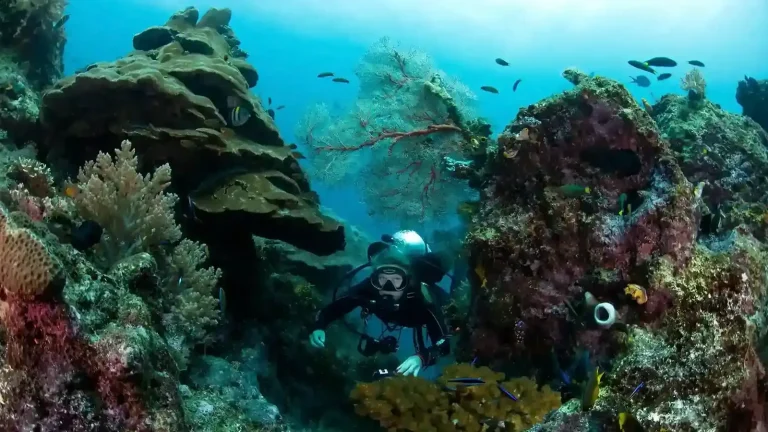
Night diving in Komodo National Park reveals an entirely different underwater world — one that remains hidden during daylight hours when most divers explore the reefs. As the sun sets and darkness envelops the ocean, the reef undergoes a dramatic transformation: day-active fish retreat into coral crevices, while an extraordinary cast of nocturnal creatures emerges to hunt, feed, and display behaviors that range from mesmerizing to bizarre. For divers staying on a yacht charter, night dives are uniquely accessible — you simply gear up on the yacht deck and descend into the water directly from your floating home, returning to a warm shower, hot dinner, and comfortable cabin after an otherworldly underwater experience.
What Marine Life Appears at Night in Komodo?
The nocturnal reef community in Komodo is spectacularly diverse. Spanish dancers (Hexabranchus sanguineus) — the world’s largest nudibranch species at up to 60 centimeters — emerge from hiding to swim through open water with undulating, flamenco-like movements that earned them their name. These crimson-red sea slugs are among the most sought-after night dive subjects in all of underwater photography. Mandarin fish (Synchiropus splendidus) perform their elaborate mating dance just after sunset in shallow rubble areas — pairs of these psychedelically patterned fish rise slowly from the substrate in a brief, spiraling embrace that photographers travel thousands of miles to witness. Hunting lionfish deploy their flowing fins like nets to corner prey against the reef wall, moving with balletic precision dramatically different from their motionless daytime posture. Octopuses — shy and camouflaged during the day — become bold nighttime predators, crawling across the reef surface with constantly changing colors and textures as they probe crevices for sleeping fish and crustaceans. Decorator crabs, slipper lobsters, and painted crayfish emerge from reef cavities in numbers that seem impossible given their invisibility during daytime dives.
Which Are the Best Night Dive Sites in Komodo?
Not every dive site that excels during the day is suitable for night diving — the best nocturnal sites offer sheltered conditions, rich rubble and sand habitat for macro creatures, and moderate depths. Wainilu (Secret Bay): Komodo’s premier muck diving site transforms at night into a macro photography paradise. Flamboyant cuttlefish walking across the sand, bobtail squid hunting with bioluminescent lures, stargazer fish buried with only their eyes visible, and coconut octopus hiding in discarded shells create a surreal underwater landscape at 5–12 meters depth. Pink Beach House Reef: the shallow, protected reef directly offshore from Pink Beach offers excellent night diving at 3–15 meters. Blue-ringed octopus, Spanish dancers, sleeping parrotfish wrapped in mucus cocoons, and hunting moray eels make this an accessible site for both experienced and newer divers. Siaba Besar: a gentle slope reef perfect for night dives with less experienced divers. Sleeping sea turtles wedged under coral ledges, browsing basket stars with arms extended to filter plankton, and tiny shrimp species that only emerge at night create compelling viewing. Manta Point (night surface encounter): while not a traditional night dive, floating at the surface near Manta Point with dive lights sometimes attracts plankton-feeding manta rays that circle beneath divers — an ethereal experience as these massive animals glide silently through your light beams.
What Equipment and Skills Do You Need for Night Diving?
Night diving requires some additional equipment and skills beyond standard recreational diving. Essential equipment: a primary dive torch (minimum 1,000 lumens, preferably 2,000+ for comfortable reef illumination), a backup torch clipped to your BCD (vital safety equipment — never night dive with only one light source), a tank marker light or chemical glow stick attached to your cylinder valve so your buddy and the dive guide can track your position, and a surface marker buoy (SMB) with a light for safe ascent. Optional equipment: a red filter for your torch (red light doesn’t spook many marine creatures and allows closer observation of natural behavior), a UV (ultraviolet) torch for fluorescence diving (coral and marine life glow in extraordinary neon colors under UV light — a phenomenon called biofluorescence), and a macro lens for your camera to capture the tiny creatures that dominate night reef encounters. Skills: night diving certification (PADI Night Diver specialty or equivalent) is recommended but not always required — most charter dive operations brief competent Open Water divers on night diving techniques and conduct night dives as guided experiences.
What Is Fluorescence Diving and Can You Do It in Komodo?
Fluorescence (fluoro) diving is a revolutionary technique that reveals an invisible underwater light show hidden on every reef. Using specialized ultraviolet or blue excitation lights with yellow barrier filters on your mask, you illuminate the reef with specific wavelengths that cause marine organisms to glow in vivid fluorescent colors — neon greens, electric oranges, brilliant pinks, and deep reds that transform a familiar reef into an alien landscape. Corals are the most dramatically fluorescent organisms, with hard corals glowing bright green, mushroom corals pulsing orange, and soft corals displaying patterns invisible under normal light. But the phenomenon extends far beyond corals: scorpionfish hidden by perfect daytime camouflage suddenly blaze in fluorescent patterns, juvenile fish reveal hidden markings, and even tiny plankton organisms create swirling galaxies of bioluminescent sparks. Komodo’s reefs are ideal for fluorescence diving because the high coral diversity means an extraordinary variety of fluorescent patterns and colors. Several yacht charter dive operations in Komodo now offer fluoro diving equipment — ask when booking if this experience interests you. It’s typically offered as an alternative to standard night dives and requires no additional certification.
How Does a Yacht Charter Make Night Diving Special?
Night diving from a yacht charter is a fundamentally different experience from shore-based or day-boat night dives. The yacht anchors directly above or adjacent to the dive site, meaning your surface interval is spent in complete comfort — no bumpy boat rides in the dark, no carrying heavy gear across beaches, and no rushing to reach a site before dark. Pre-dive briefing happens in the yacht’s comfortable salon with detailed site maps and species guides. The dive itself benefits from the yacht as a visual reference point — its hull lights provide orientation, and you can surface directly to the swim platform for an easy exit. Post-dive, you rinse your gear on the yacht’s dive deck, step into a hot shower, change into comfortable clothes, and sit down to a chef-prepared dinner within minutes — often while discussing the incredible creatures you just encountered. Some yacht charters offer “under the boat” night dives where powerful hull-mounted lights attract plankton, which draws a food chain of increasingly larger predators — squid, reef fish, and sometimes sharks and manta rays — creating a natural aquarium illuminated against the yacht’s hull.
FAQ: Night Diving Komodo
Is night diving safe? Yes, with proper preparation and guide supervision. Charter dive operations conduct thorough briefings, maintain small group sizes (maximum 4 divers per guide), and dive only at sites with suitable conditions for night diving.
Do I need special certification? PADI Night Diver specialty or equivalent is recommended but not always required. Competent Open Water divers can join guided night dives after a briefing. Some operators offer night dive introductory courses during your charter.
What depth are most night dives? 5–18 meters typically. Shallower depths concentrate more macro life and allow longer bottom times. Deep night dives (beyond 20m) are generally unnecessary and less enjoyable.
Will I see sharks at night? Whitetip reef sharks (Triaenodon obesus) are commonly seen resting on the sand during night dives. They’re docile and non-threatening. Occasionally, reef sharks may be attracted to dive lights hunting small fish.
Is night diving included in the charter price? Most dive-focused yacht charters include night dives as part of the standard dive program. Confirm with your operator — some include 1 night dive per charter while others offer them nightly.
What if I’m nervous about night diving? Start with a twilight dive (entering before full dark) to ease into the experience. Your guide stays close and the yacht’s lights provide constant orientation. Most divers overcome initial anxiety within the first 5 minutes once the incredible nocturnal reef captures their attention.
Explore Komodo After Dark
Our dive-focused yacht charters include guided night dives at Komodo’s most spectacular nocturnal sites.