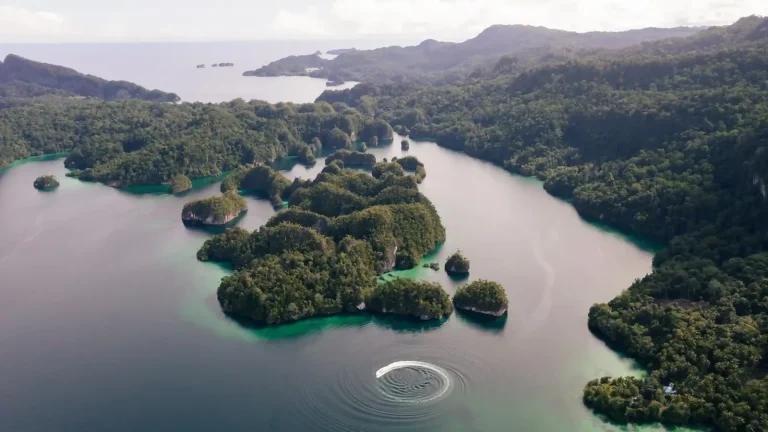
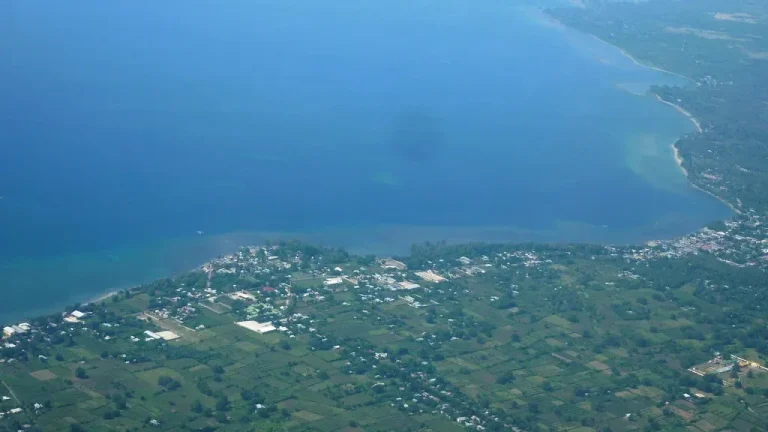
The real difference in north vs south Komodo diving comes down to two oceans meeting inside one national park: the north is warm, clear and swept by fast Flores Sea currents, while the south is cooled by Indian Ocean upwelling that pulls in mantas and pelagic life. Which zone you dive on any given day matters more than almost any other decision in planning a 2027 dive charter.
Below is how each zone behaves through the April–November season, and why the best dive vessels here are the ones free to change route every morning.
One Park, Two Very Different Oceans
To the north lies the Flores Sea: warmer, generally clearer, fed by water moving through the straits on every tide. To the south lies the open Indian Ocean, where seasonal upwelling drags cool, nutrient-rich water up from the deep. The park’s dive sites are strung along the channels between these two systems, so conditions are dictated by tide, wind and swell rather than by a calendar — two distinct diving personalities inside a single marine park.
North Komodo: Warm Water, High Visibility, Adrenaline Currents
The north is where Komodo earns its reputation for electric, current-swept diving. Sites such as Crystal Rock and Castle Rock are submerged pinnacles standing in the path of the tidal flow, and when the current runs they light up: schooling fusiliers, sweeping trevally, reef sharks patrolling the up-current side, and hard coral fed by the constant clean flow.
Water in the north is typically warm and comfortable, and visibility is often at its most generous during the dry season. The trade-off is that the marquee sites are genuine current dives: negative entries, reef hooks and tight group discipline are standard practice on a running tide, which is why timing them around slack water matters so much. The north also offers sheltered bays around Gili Lawa and the central islands — relaxed reefs for newer divers and calm anchorages for the evening.
South Komodo: Cool Upwelling, Manta Alley and the Pelagic Show
The south coast is a different world. Dry-season upwelling from the Indian Ocean brings noticeably cooler, plankton-rich water to the park’s southern edge. Visibility drops compared with the north — but that plankton is exactly what draws the animals everyone comes to see.
Manta Alley, off southern Komodo Island, is the zone’s signature site: a rocky channel where reef mantas gather to feed and visit cleaning stations, at times in remarkable numbers. The surrounding southern walls and slopes are dense with soft corals and unusual critters that thrive in the cooler, richer water — divers who love big-animal encounters tend to rate the south as the highlight of their trip.
The practical realities: most divers move to a thicker wetsuit here, thermoclines are part of the experience, and access depends heavily on the day’s swell. The park’s other reliable manta aggregation, Manta Point at Karang Makassar in the central corridor, is a useful fallback when the south coast is not workable.
Month by Month: When Each Zone Peaks (April–November)
Komodo’s charter season runs broadly April to November. Within that window, the two zones peak at different times:
- April–May: The transition out of the wet season. Winds are light, seas are settling, and both zones are frequently workable in the same week.
- June–August: Peak dry season. The north is at its clearest, while the south experiences its strongest upwelling — the coolest water of the year, but the most productive manta feeding conditions. Trade-wind swell can limit south-coast access on some days, which makes routing flexibility essential.
- September–October: For many dive professionals, the sweet spot. Winds ease, the south becomes consistently reachable while its rich water lingers, and the north remains in fine form — trips in this window often manage a genuine two-zone circuit.
- November: The season winds down and many yachts reposition for the Raja Ampat season, which runs roughly November to April. If your dates fall late in the year, a Komodo and Raja Ampat dual-season charter lets you follow the good weather across Indonesia rather than fight it.
Why a Private Charter Changes the Equation
Shared liveaboards sail fixed routes published months in advance — if swell shuts down Manta Alley on the one day the schedule allots to the south, that day is simply lost. A privately chartered vessel operates on the opposite logic: the route serves the conditions, not the other way around.
On a crewed yacht charter in Komodo, the captain and dive guide review tide tables, wind and swell forecasts every evening and set the next day’s plan accordingly — Castle Rock at slack water in the morning, a sheltered reef in the afternoon, and a run south the moment the swell window opens. Over a five- to seven-night itinerary, that daily freedom is frequently the difference between reading about Manta Alley and actually diving it.
Fully crewed charters in this class typically include the dive guide, tenders, chef and full crew in one rate. As indicative guidance, quality private phinisi charters start from roughly USD 1,900–4,500 per night for the whole vessel, with premium yachts and superyacht tiers quoted on request.
The Onboard PADI Dive Guide: Your Route Architect
Luxury charters in Komodo sail with a PADI-certified dive guide or cruise director as part of the permanent crew, and here that role is far more than a fin-wearing escort. Your guide sequences sites around the tide, matches each dive to the group’s certification and comfort level, briefs negative entries and reef-hook technique before the current dives, and coordinates the tender drops and pickups that make drift diving effortless.
Just as importantly, the guide is the person translating “we want mantas and one big current dive” into a workable two-zone plan with the captain. The diving programme run by our operating partner Komodo Luxury is built around exactly this model: professional guides embedded in the crew, planning around real conditions rather than a printed schedule.
Experience Levels: Which Sites Suit Which Divers
Honest matching of divers to sites is central to a good Komodo trip:
- Northern pinnacles (Crystal Rock, Castle Rock, Batu Bolong’s exposed edges): Best suited to advanced divers relaxed in current. Advanced Open Water plus genuine drift experience is the sensible baseline; even then, your guide may hold a site until slack water.
- Sheltered northern and central reefs (Gili Lawa bays, Siaba, Sebayur): Welcoming to newer Open Water divers and ideal for warm-up dives on day one.
- Manta Alley and the southern slopes: Moderate — the challenge is cooler water and surge rather than raging current. Comfortable Open Water divers with a few logged dives generally manage well.
- Snorkellers and non-divers: Manta Point, Pink Beach and the shallow northern reefs offer world-class snorkelling, so mixed groups lose nothing on a dive-focused route.
For a deeper look at individual sites, see our guide to the top Komodo dive sites reachable by yacht.
Frequently Asked Questions
Is north or south Komodo better for beginner divers?
The north — but only its sheltered sites. Bays around Gili Lawa and the central reefs give new divers calm, warm conditions, while the famous northern pinnacles should wait until you have solid current experience. Your onboard guide will assess the group on day one.
When can I dive both north and south Komodo on one trip?
September and October offer the most reliable window for a full two-zone circuit, as trade-wind swell eases while the south’s rich water remains. April and May are a strong second choice; in June–August a private charter can still reach the south when a swell window opens.
How cold does the water get in south Komodo?
Noticeably cooler than the north — the upwelling commonly feels several degrees colder, with sharp thermoclines on some dives. Most divers who use a 3mm wetsuit in the north switch to a 5mm for the southern sites, and your guide will advise before each dive.
Do I need an advanced certification for Crystal Rock and Castle Rock?
Advanced Open Water with drift experience is the recommended baseline, as these open-water pinnacles can carry strong current and may begin with a negative entry. On a private charter, your guide times them for slack water and can substitute sheltered alternatives for less experienced divers.
Can non-divers enjoy a north-south dive route?
Absolutely. Snorkelling with mantas at Manta Point, swimming at Pink Beach, the Padar viewpoint hike and Komodo dragon trekking all slot naturally between dives, so families and mixed groups share the same itinerary without compromise.
Plan Your 2027 North-South Komodo Dive Charter
Komodo rewards travellers whose boats can move with the ocean, and a private crewed charter with an embedded dive guide is the surest way to experience both faces of the park in one voyage. Tell us your dates, group size and diving experience, and we will match you with the right vessel and route for 2027’s conditions. Message our charter team on WhatsApp at +62 811-3823-875 or email [email protected] for a tailored proposal and current availability.