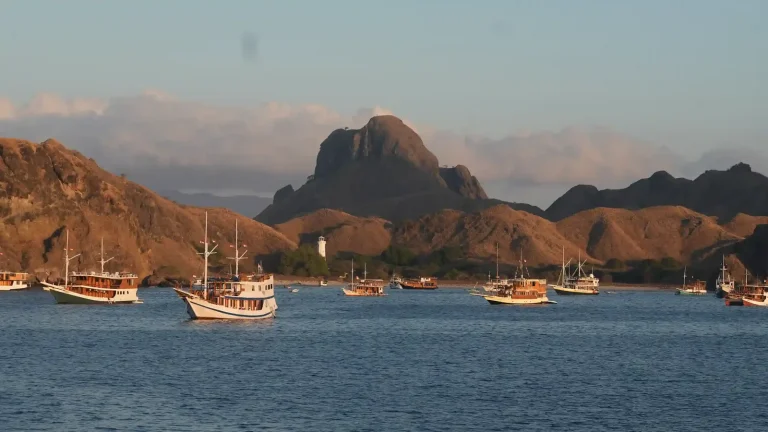
In Komodo, booking through a specialist charter broker typically costs the same as booking direct with a vessel owner — and sometimes less — because brokers are paid a commission by the operator rather than adding a fee on top of your rate. The real difference between the two routes is not price; it is fleet access, ground handling in Labuan Bajo, and who advocates for you when weather or park regulations force a change of plan mid-voyage.
This guide sets out how each route works, where the money goes, and the due diligence any guest chartering a superyacht or luxury phinisi should complete before transferring a deposit.
The Two Routes to a Komodo Charter, Defined
Booking direct means contracting with the company that owns or manages a single vessel. Booking through a broker or local specialist means working with an intermediary who represents many vessels, matches you to the right one, and manages the contract, payments, and logistics on your behalf.
Neither route is inherently wrong. Direct works well when you already know the yacht and can handle Indonesian logistics yourself. A specialist earns its place in almost every other scenario — which, in Komodo, covers most first-time and many repeat charters.
What a Local Charter Specialist Actually Provides
Access to the full fleet, not one boat
A single owner can only sell you their own vessel, whether or not she suits your party. A Komodo-focused desk like ours works across more than 160 vessels — from classic phinisi to superyachts in the class of Lamima, Dunia Baru, Prana, Vela, and Aqua Blu — and can tell you which boats are maintained to standard and which photograph better than they sail. That fleet-wide view is the core of what a dedicated Komodo yacht charter broker does: matching party size, cabins, dive program, and budget to the right hull.
The same rate — or better
Because the operator pays the broker’s commission out of the published charter rate, guests generally pay the same price either way. Specialists who place volume with the same fleets can often negotiate value a one-time guest will not see: complimentary shoulder-season nights, upgraded provisioning, flexibility on embarkation ports. Indicative weekly rates — from around US$50,000–70,000 for a top-tier crewed phinisi and from US$100,000 upward for large superyachts, excluding park fees and provisioning — are set by the operator, not the intermediary; our Komodo weekly rate guide breaks the bands down by vessel class.
Ground handling in Labuan Bajo
A Komodo charter is not only a boat. It is airport transfers, national park permits and ranger arrangements, tender logistics, and provisioning in a small harbour town. We work with Komodo Luxury, the established Labuan Bajo operator, for ground handling — meaning someone is physically at the port when your party arrives, not answering emails from another time zone.
An escalation path when conditions change
Komodo’s prime cruising season runs roughly April to November; Raja Ampat takes over from November to April. In shoulder months, sea state and park access can shift within a day. When that happens, a direct guest negotiates alone with a captain whose incentives may not match theirs. A specialist re-routes the itinerary, re-books moorings and dives, and in the rare worst case moves the party to another vessel in the network — an escalation path that is invisible when all goes well and priceless when it does not.
The Myth That Booking Direct Is Always Cheaper
The assumption behind “cut out the middleman” is that the intermediary’s fee is stacked on top of your price. In crewed yacht charter, that is not how the economics work: operators publish a rate and pay intermediaries from within it — the same model as luxury hotels. Booking direct rarely unlocks a discount, because operators have little reason to undercut the brokers who fill their calendars all season.
Where direct bookings can genuinely be cheaper is at the informal end of the market: unlisted local boats, cash deals, last-minute gaps. Those savings usually come with the exact risks — thin insurance, unclear licensing, no written contract — the due diligence section below is designed to catch. For a group spending five to six figures on a week at sea, the discount is seldom worth the exposure.
How Commission Actually Works in Charter
Standard practice in the international charter industry is that the operator or central agent pays the retail broker a commission — commonly cited in the range of ten to twenty percent — out of the published rate. The guest’s contract price does not change based on who introduced the booking. Two honest caveats belong in any neutral account of this system:
- Bad actors exist. An intermediary can quietly mark a rate up beyond the published price, particularly for overseas clients who never see the operator’s own tariff. The defence is simple: ask any broker to confirm rate parity in writing.
- Commission can bias recommendations. A broker earns more placing you on a higher-rate vessel. A reputable specialist discloses options across price bands and puts fit ahead of ticket size. If every recommendation sits at the top of your stated budget, treat that as information.
Questions to Ask Before Transferring Any Deposit
Whether you book direct or through a specialist, these belong in writing before money moves:
- Who exactly am I paying? The full legal name of the company on the invoice, and its relationship to the vessel — owner, manager, or agent.
- Is there a written charter agreement? Vessel named, dates, guest count, inclusions, payment schedule, cancellation terms. No contract, no transfer.
- What is the payment structure? A staged schedule — deposit on signing, balance before embarkation — is normal. Full payment up front to an unverified account is a warning sign.
- What happens if weather changes the itinerary? The park can restrict access at short notice; get re-routing and force majeure terms into the contract.
- Is the vessel confirmed for my dates? Ask for a named-vessel confirmation, not a “similar boat guaranteed” clause — that is where bait-and-switch lives.
- Who arranges park permits and fees? Entry permits, ranger fees, and diving should be explicitly included or excluded — never assumed.
Due Diligence Checklist: Legality, Insurance, Crew
Before final payment on any Komodo charter, direct or brokered, verify three things:
- Vessel legality. Indonesian registration, valid seaworthiness documentation, and the licences to carry paying passengers and operate inside Komodo National Park. A legitimate operator produces these on request without friction.
- Insurance. Hull insurance protects the owner; what protects you is passenger liability cover. Confirm current cover, and consider your own travel insurance with marine-activity and medical-evacuation benefits — major medical facilities are far from the park.
- Crew certification. A licensed captain and engineer appropriate to the vessel’s size, and — if diving is planned — certified dive guides with functioning safety equipment, oxygen, and a briefed emergency plan.
This article is general guidance, not legal or financial advice. Indonesian regulations, licensing, and insurance requirements change; verify current requirements with the operator and, for significant contracts, with a licensed professional before committing funds.
Frequently Asked Questions
Is it cheaper to book a Komodo yacht charter direct with the owner?
Usually not. Operators pay broker commissions out of the published rate, so guests pay the same price through either channel. Genuine direct savings mostly appear on informal, unlisted boats — where the risks are highest.
How does a charter broker get paid?
By commission from the vessel operator, commonly cited at ten to twenty percent, paid from within the published rate. Reputable brokers will confirm rate parity with the operator’s own price in writing.
What deposit is normal for a Komodo charter?
A staged schedule is standard: deposit on signing, balance before embarkation. Exact terms vary by vessel and season — and treat demands for full upfront payment to an unverified account with caution.
Can a broker get a better deal than the operator’s website?
Sometimes. Specialists placing repeat volume can access shoulder-season value, added nights, or upgraded provisioning that public tariffs do not show — though not a headline rate below the operator’s published price on identical dates.
What documents should I verify before paying?
A written charter agreement naming the vessel and dates, the operating company’s legal identity, vessel registration and passenger licensing, current insurance including passenger liability, and crew certifications.
When is the best season to charter in Komodo?
Roughly April to November; many fleets reposition to Raja Ampat from November to April. Peak months carry premium pricing, so shoulder dates often offer the best value.
Talk It Through Before You Commit
The honest summary: booking direct is reasonable when you know the boat and the ground game; a specialist costs nothing extra and stands between you and everything that can go sideways in a remote national park. For a side-by-side quote on specific vessels and dates — rate parity confirmed in writing — message our charter desk on WhatsApp at +62 811-3823-875 or email [email protected]. We will tell you plainly when direct is the better route.
Sailing update: after the 15 August 2026 Flores earthquake, the Labuan Bajo Harbormaster reopened sailing the same day and trips are running normally. For current departures see Komodo yacht charter rates and vessels, and the first-hand status report at Komodo Luxury’s live Labuan Bajo update.