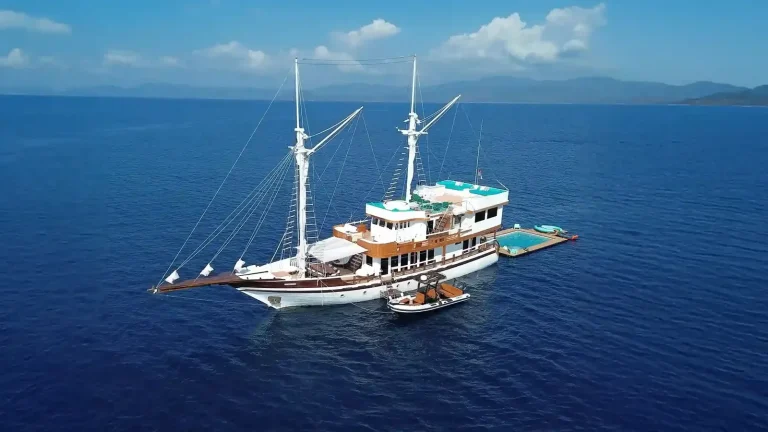
An explorer yacht in Indonesia is a steel- or aluminium-hulled expedition vessel — typically 35–50 metres, carrying 10–14 guests in 5–7 cabins — engineered to cross the long, remote passages of the eastern archipelago that day boats and most conventional charter yachts cannot attempt. For the 2027 season, this class is the most consequential choice a charter guest can make, because explorer yachts are the only vessels that realistically link Komodo, Raja Ampat, Triton Bay and Cendrawasih Bay into a single, uninterrupted voyage.
This guide explains what defines the class, why 2027 is the year of the expedition vessel in eastern Indonesia, and how it compares with a luxury phinisi. If you already know you want this category in Komodo waters, our dedicated explorer yacht charter in Komodo page covers vessel-by-vessel planning in depth.
What Defines an Explorer Yacht?
The term is used loosely, so it helps to anchor it in the specifications that matter at sea. A true explorer yacht in the Indonesian fleet is a steel or aluminium motor yacht — occasionally a large sailing yacht — of roughly 35–50 metres, configured for 10–14 guests. Three attributes separate the class:
- Range and self-sufficiency. Explorer hulls are built for long, open-water passages between provinces, not short hops between anchorages. That range is what puts frontier destinations on the itinerary at all.
- Full dive support. The serious expedition vessels carry a compressor, tenders and a dedicated dive team, so remote walls and seamounts can be dived day after day without returning to port.
- Structured crewing. Expect a captain, first mate, engineer, deck team and housekeeping as standard, with top vessels adding a spa therapist, mixologist and a cruise director who designs each day’s program of dives, snorkels and hikes.
In short: the class is defined by where it can go and what it can sustain when it gets there — the luxury finish is the baseline, not the headline.
Why 2027 Belongs to the Expedition Vessel
Eastern Indonesia’s charter calendar has always been split in two: Komodo runs best from roughly April to November, while Raja Ampat comes into its own from November to April. Historically, most charter guests picked one region and one season. What has changed is demand at the top of the market: guests increasingly want both regions — plus the frontier waters between them — in a single trip or a linked pair of trips.
Only the explorer class serves that demand cleanly. A 40-metre expedition hull can finish a Komodo season, reposition east, and open a Raja Ampat program without compromising comfort on the crossing. Phinisi and smaller motor yachts can reposition too, but the explorer yacht does it with the range, stability and redundancy that ultra-remote cruising demands — which is why we expect expedition vessels to be the first category to sell out for peak 2027 dates.
The Aqua Blu Model: Fixed Routes Across Three Regions
The clearest illustration of the explorer concept working commercially is the Aqua Blu approach. Aqua Blu is an ex-British Navy vessel refitted as a luxury expedition yacht, and rather than sitting in one region waiting for bookings, she operates fixed-route itineraries across Komodo, Raja Ampat and the Spice Islands — following the seasons east and west through the year.
The fixed-route model matters for charter guests in three ways:
- The ship is always in the right sea at the right time. Komodo in the dry months, Raja Ampat when its waters are calmest, and the Spice Islands as the connecting chapter between them.
- Crossings become part of the voyage. The Banda Sea passages that a smaller vessel would treat as a logistical problem become cruising days with diving and island calls built in.
- Frontier stops become bookable. Destinations with no charter infrastructure of their own can sit on the route because the vessel brings its own infrastructure with it.
Several vessels in the wider Indonesian fleet now follow versions of this pattern; for 2027 planning it is the template we recommend UHNW groups study first.
Frontier Destinations Only Realistic by Explorer Yacht
Two names come up in almost every serious 2027 expedition enquiry, and both sit firmly in explorer-yacht territory.
Triton Bay and Kaimana
On the southern coast of West Papua, Triton Bay pairs limestone karst scenery with some of the richest soft-coral reefs in the archipelago. With no meaningful land-based luxury option, the vessel is the destination’s entire infrastructure: accommodation, dive centre and expedition base in one hull. Our operating partner Komodo Luxury maintains a detailed Triton Bay and Kaimana destination guide covering routing and trip design for the region.
Cendrawasih Bay
Further north, Cendrawasih Bay is remoter still. Reaching it means long passages far from any support — which is exactly why an explorer yacht with genuine range and full dive support is effectively the entry ticket. For guests who have already done Komodo and Raja Ampat, Cendrawasih is the natural next chapter.
Neither destination makes sense as a day-boat or short-range charter. They are the payoff for choosing the expedition class.
Explorer Yacht vs Luxury Phinisi: Different Missions
The comparison is not about which class is better — it is about which mission you are running. A luxury phinisi is a hand-crafted Indonesian schooner, usually 30–55 metres with 4–7 cabins for 8–14 guests, and it delivers an unmatched sense of place: teak decks, Indonesian interiors, sails against a Flores sunset. For a romantic Komodo week or a family sailing holiday inside one region, the phinisi charter remains our most-loved recommendation.
The explorer yacht wins when the mission is distance and depth: multi-region routes, serious repetitive diving on a Komodo diving charter and beyond, and frontier waters where self-sufficiency is non-negotiable. Many of our returning guests alternate — phinisi for atmosphere one year, expedition vessel for reach the next.
What an Explorer Yacht Charter Costs in 2027
All figures below are indicative, quoted for private full-vessel charter, and always confirmed per vessel and per date on request. Based on current Indonesia-wide charter pricing:
- Luxury motor yachts run from an indicative USD 3,500–6,000 per night at standard-luxury level, and from USD 6,000–12,000 per night at premium level.
- Expedition-grade superyachts price from an indicative USD 8,000–15,000 per night, with ultra-luxury vessels from USD 15,000–27,000+ per night.
- Weekly framing: top-tier vessels for 8–12 guests typically land from USD 100,000–200,000+ per week at the superyacht end, exclusive of taxes and expedition surcharges.
- Seasonality: high-season dates — June to August and December — commonly carry a 15–25% premium on base rates.
Because explorer itineraries cross regions, quotes also reflect repositioning legs and park fees; a precise, all-in figure is only meaningful once route and dates are fixed.
Planning a 2027 Expedition Route
The cleanest way to structure a 2027 explorer charter is to work with the seasons: Komodo from April to November, Raja Ampat from November to April, with Triton Bay and the Spice Islands as connecting chapters in the transition months. If your ambition is both flagship regions in one plan, our Komodo–Raja Ampat dual-season charter guide maps out how the seasonal handover works and which windows to book first.
Frequently Asked Questions
What is an explorer yacht in Indonesia?
An explorer yacht is a steel- or aluminium-hulled expedition vessel, typically 35–50 metres with 5–7 cabins for 10–14 guests, built with the range, stability and full dive support — compressor, tenders, dedicated dive team — needed for remote, multi-region cruising across eastern Indonesia.
How much does an explorer yacht charter cost in 2027?
Indicative private-charter rates run from USD 8,000–15,000 per night for premium expedition superyachts and from USD 15,000–27,000+ per night at ultra-luxury level, with high-season dates carrying a 15–25% premium. Exact quotes are prepared per vessel and route on request.
Which destinations require an explorer yacht rather than a phinisi?
Triton Bay, Kaimana and Cendrawasih Bay are the clearest cases: they have virtually no land-based infrastructure and demand long unsupported passages, so a self-sufficient expedition vessel with full dive support is the only realistic way to visit in comfort.
Should I choose an explorer yacht or a luxury phinisi?
Choose a phinisi for atmosphere and a single-region voyage — Komodo under sail is hard to beat. Choose an explorer yacht when the mission is reach: multi-region routes, intensive diving, and frontier destinations that reward range and redundancy.
How far ahead should I book for the 2027 season?
The pool of genuine expedition vessels in Indonesia is small and several follow fixed seasonal routes, so peak Komodo (June–August) and peak Raja Ampat (December–February) windows are best secured nine to twelve months in advance.
Secure Your 2027 Expedition Dates
If 2027 is the year you take on Indonesia’s frontier — Komodo to Raja Ampat, Triton Bay to Cendrawasih — the right explorer yacht is the decision everything else follows from. Our specialists will shortlist available expedition vessels for your dates, map the routing and prepare indicative quotes. Message us on WhatsApp at wa.me/628113823875 or email [email protected] to start planning.